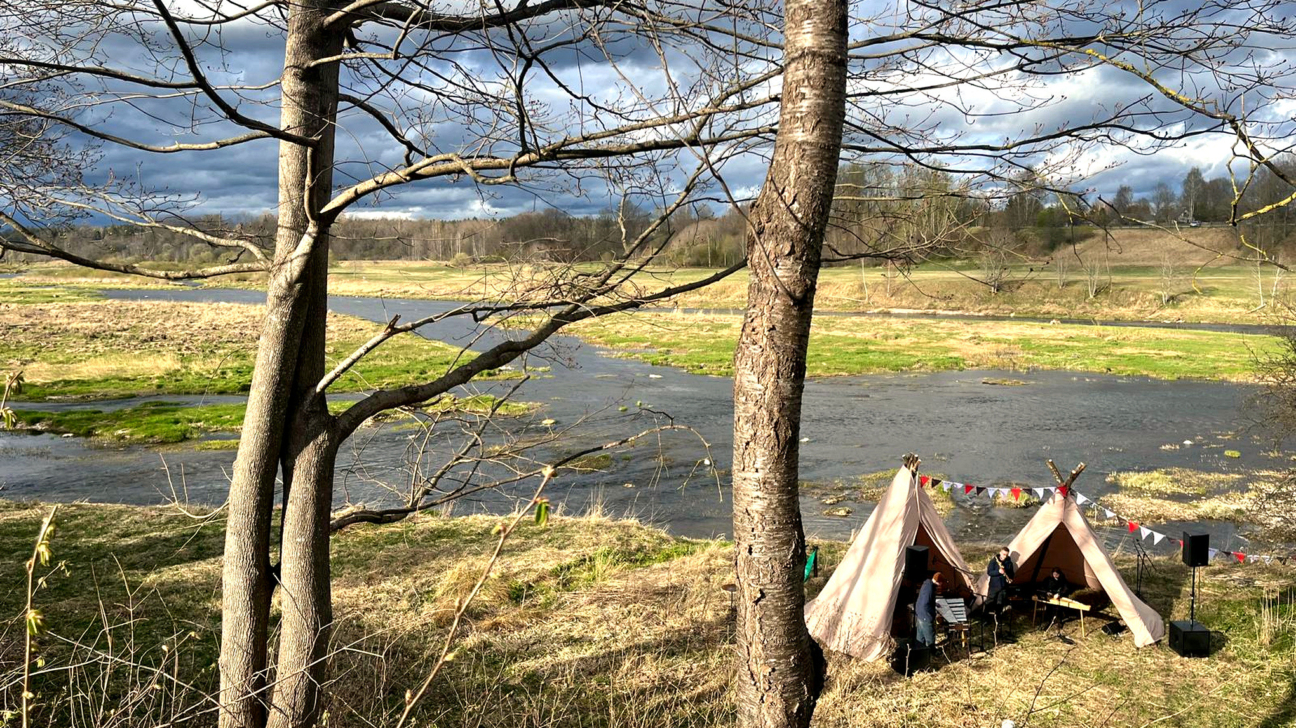
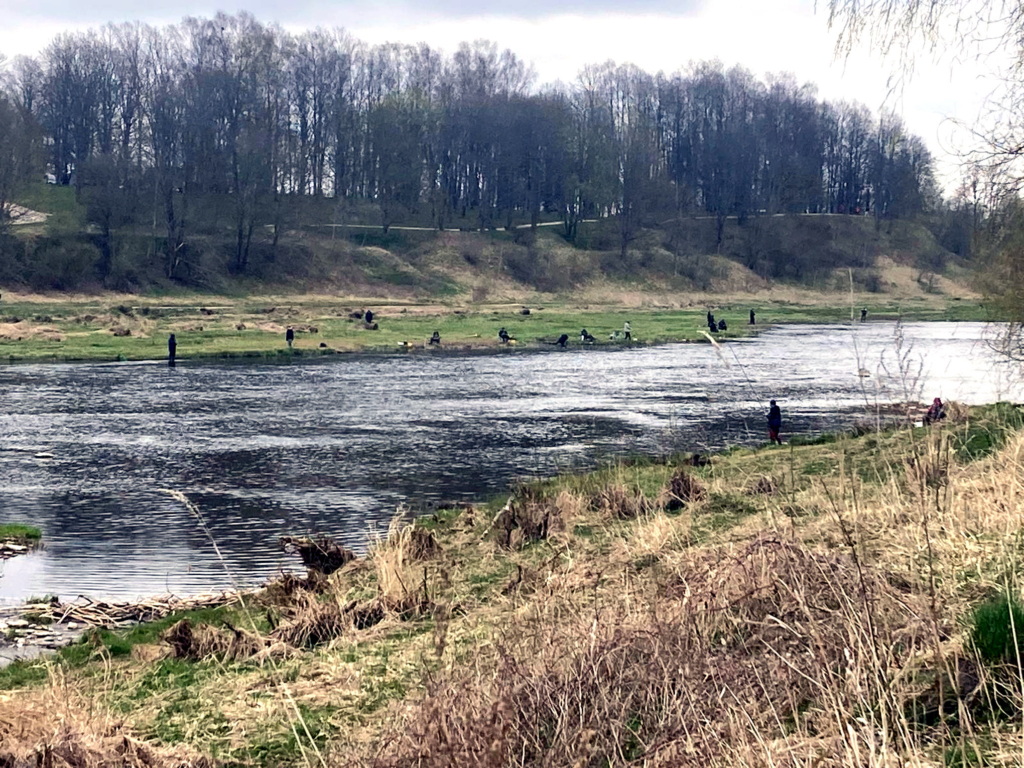
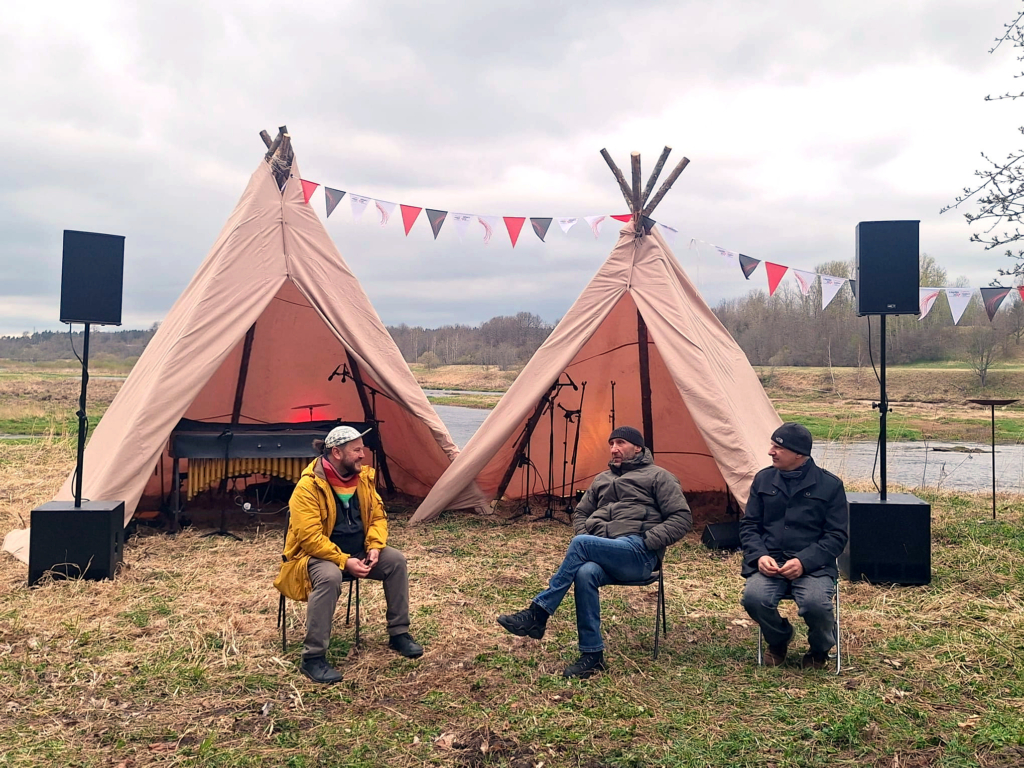
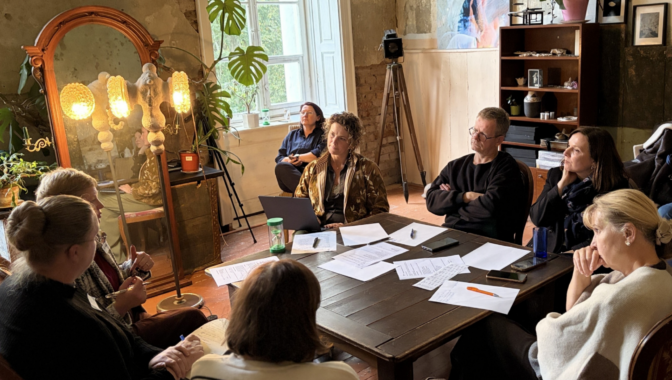
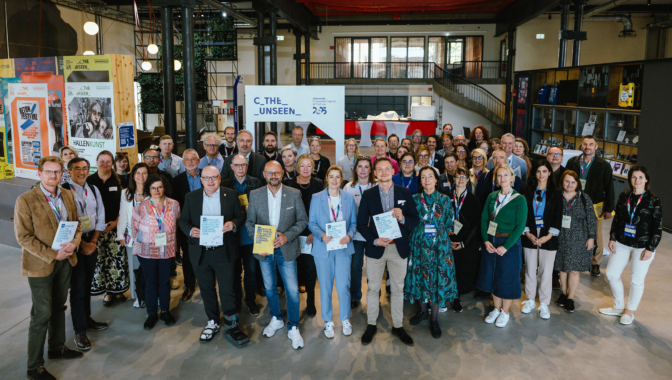
Launching the “Liepāja – European Capital of Culture 2027” programme initiative “Salmon Song”, a public discussion titled “Spawning is not a buffet” took place on Saturday, 25 April, in Kuldīga. The event brought together members of the public and industry representatives to draw attention to the critical state of salmon populations and related environmental issues.
The discussion featured specialist Valdis Plaudis and State Environmental Service inspector Jānis Sprugevics, who outlined the current situation in Latvia. It was emphasised that, when viewed solely through the lens of coastal fishing, solutions in certain regions — including the Kuldīga area — have been introduced too late. At the same time, the work of inspectors and the development of technology, such as video surveillance, has delivered significant results, substantially reducing illegal fishing in this area. Elsewhere, particularly in lower river stretches, the problem persists, as organised groups operate in conditions of weaker supervision.
Demand was also highlighted as an important factor — if there are no buyers for illegally caught salmon, such activity loses its purpose. At the same time, experts stressed that salmon populations in Latvia have significantly declined, and fishing for them is currently prohibited. Criminal proceedings may also be initiated for violations.
The discussion also explained the role of fish hatcheries in restoring populations. A portion of salmon are taken during spawning for artificial breeding, and after being raised, their offspring are released back into rivers. These are typically juveniles around one year old, and some of them have their adipose fin clipped, allowing researchers to later identify their origin and migration routes.
In a broader context, it was emphasised that the decline in salmon numbers is part of global environmental change. Climate change, rising water temperatures, fluctuations in food availability, river overgrowth, and the reduction of spawning grounds all significantly affect salmon survival. In winter, a lack of oxygen beneath ice cover can further reduce survival rates.
At the conclusion of the discussion, attention was drawn to the question of public responsibility — what each of us can do to help bring salmon back to Latvia’s rivers. Answers to this question are still being sought, but it is clear that both individual action and long-term cooperation are essential.
The atmosphere of the event was enriched by a musical performance by Trio Tresensus — Līga Griķe (kanklės), Aigars Raumanis (saxophone), and Uģis Upenieks (percussion). A particularly emotional accent was created by Aigars Raumanis’s composition “O, Peixe” (“The Fish”), which symbolically reflects the relationship between humans and nature. The piece is based on the story of a tribe that would lovingly embrace caught fish until they died.
“Salmon Song” is implemented within the programme “Liepāja – European Capital of Culture 2027” with funding from the Ministry of Culture, the City of Liepāja, and the municipalities of Dienvidkurzeme and Kuldīga. The Liepāja 2027 programme is supported by its main partner in environmental education and sustainability, AS “CleanR Grupa” JSC; its main partner in mobility and international communication, AS “airBaltic Corporation” JSC; and its mobility partner, transport operator SIA “Lux Express Latvia” Ltd. Informational partners – VSIA “Latvian Public Media”, AS “Kurzemes Radio”.