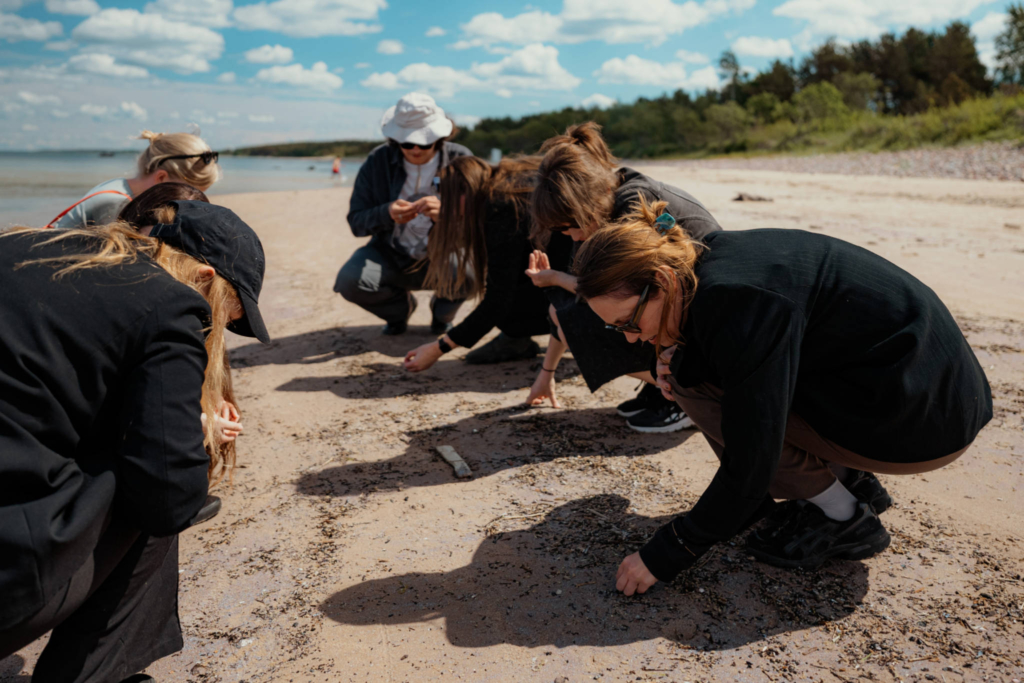
From June 12 to 14, the International Symposium “ElektrON – The Future of Amber” took place in Liepāja and Pāvilosta. The event brought together artists, researchers, curators, designers, and cultural historians from Latvia, Lithuania, Norway, Germany, Hong Kong, and Canada. Organized as part of the “Liepāja – European Capital of Culture 2027” program, the symposium explored the cultural and historical significance of amber, the future of fossil resources, and humanity’s relationship with the environment.
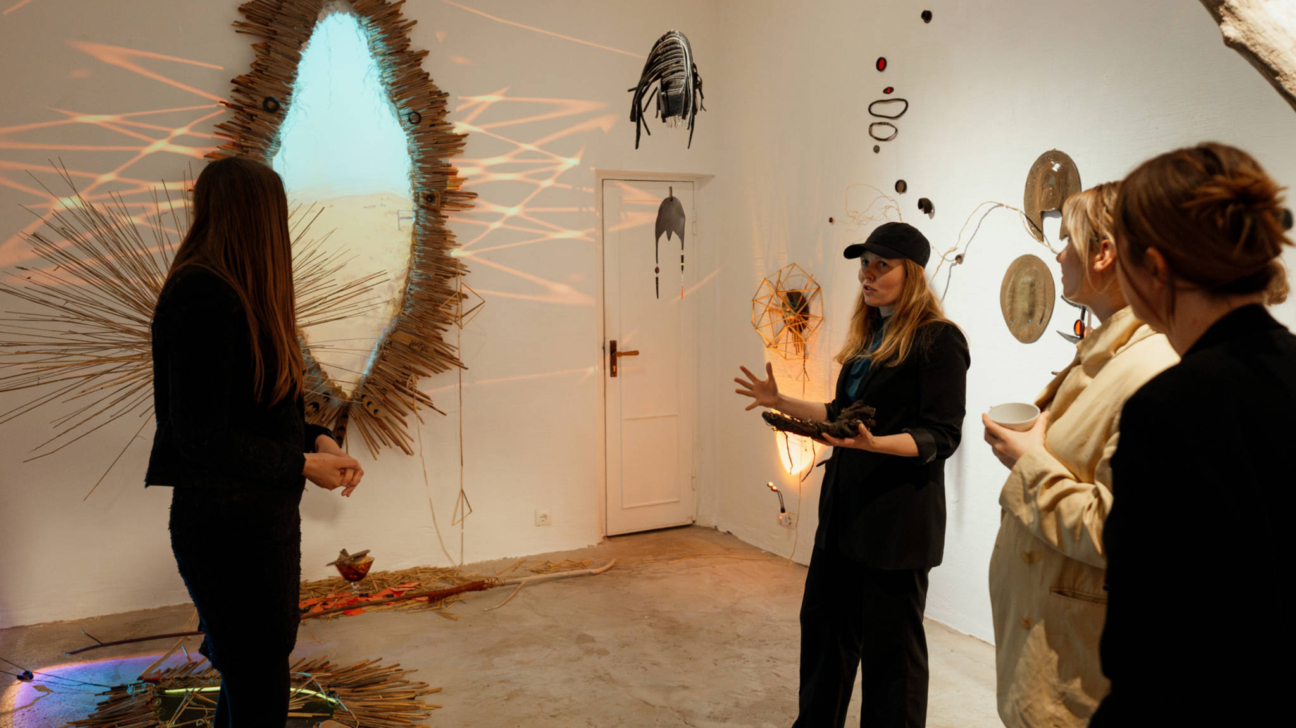
The first day of the symposium was dedicated to exploring the region’s amber-working traditions and contemporary practices. Participants visited the folk applied arts studio “Zītars”, the only amber-processing studio in Latvia. Drawing on archaeological and ethnographic heritage, the studio creates both traditional and contemporary amber and metal jewellery.
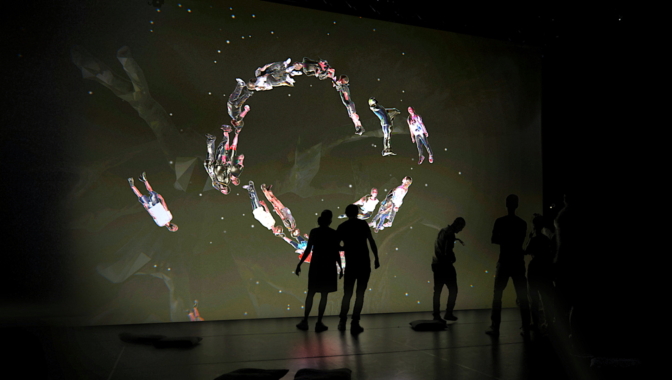
The symposium’s public program opened at the Art Research Laboratory (MPLab) of the RTU Liepāja Academy with a lecture by German artist Lisa Rave. During the lecture, the artist presented her creative practice, which explores human relationships with the geological environment through the perspectives of art and anthropology. The lecture was followed by a discussion with the audience and a screening of her essay film “Europium”. The film examines the history of colonialism and the lasting impact of fossil resource extraction on contemporary society.
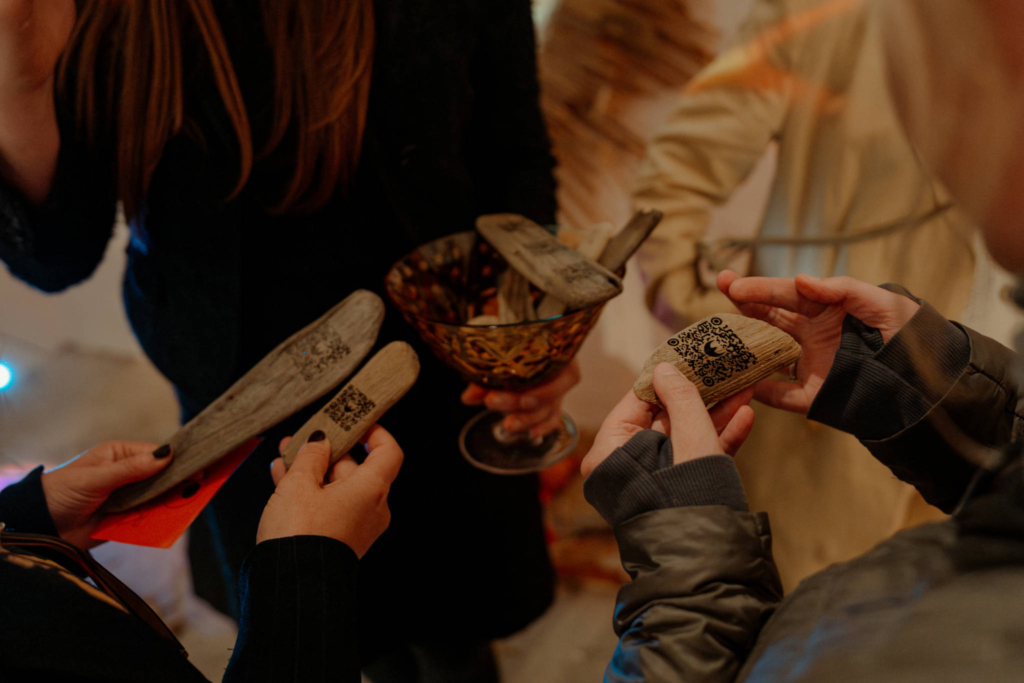
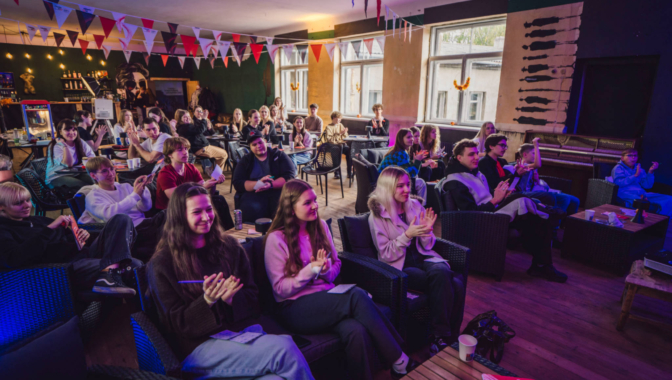
To conclude the day, artists Maija Demitere and Rogier Jupin hosted a performative dinner event titled “Slow Food / Slow Connection – A Vegan DIY Networking Dinner.” The event fostered an atmosphere of informal conversation, encouraging participants to exchange ideas and build new connections.
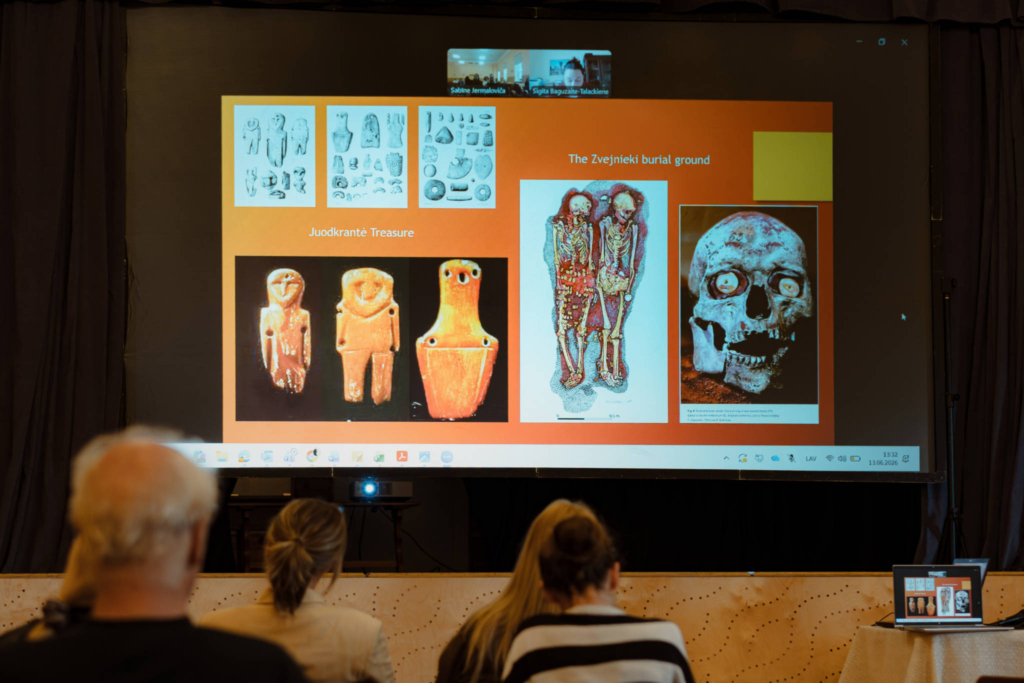
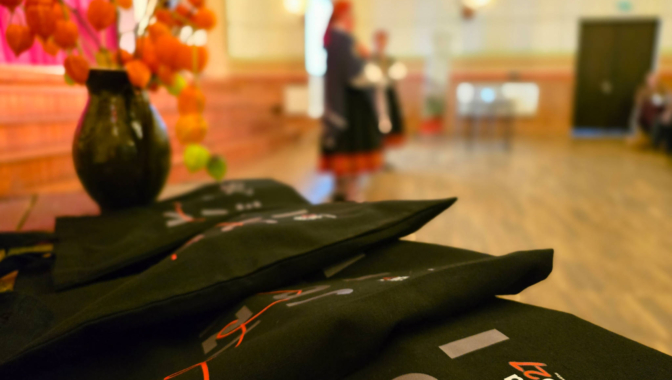
On the second day, a series of lectures was held at the Pāvilosta Cultural Center, focusing on the cultural and historical significance of amber and its potential in contemporary art, design, and technological culture. Barbara Ābele, a professor at the Art Academy of Latvia, design researcher, and textile artist, presented her work “The Amber Code” (2014), in which the materiality and chemical structure of amber are interpreted through a textile installation. In her lecture “Electric* Art”, artist and researcher Paula Vītola explored the relationship between art and science, paying particular attention to Enlightenment-era research on electricity and its influence on contemporary culture. Interdisciplinary curator and artist Zane Cērpiņa (Norway), in her lecture “Instructions for Future Fossils”, invited the audience to consider amber as a tool for imagining the future. She addressed the question of what traces of modern civilization might be preserved in the fossils of tomorrow. Sigita Bagužaitė-Talačkienė (Lithuania), director of the Palanga Amber Museum, spoke about the history of Baltic amber and its importance within the region’s cultural heritage. Director and artist Signe Birkova presented her master’s thesis, developed as part of her studies at the Art Academy of Latvia. Through a playful approach, the project explores amber and the cultural perceptions and meanings associated with it.
In the afternoon, symposium participants were introduced to the artists’ visions and conceptual approaches developed for the “ElektrON – The Future of Amber” project. Presentations were given by Michael Saup (Germany), Mikus Svikulis, Ieva Viese, Zane Zelmene, Aistė Ambrazevičiūtė (Lithuania), Kim Hankyul (Norway), Trevor Yeung (Hong Kong), and Helen Liene Dreifelds (Canada), who shared the ideas, research interests, and creative directions that inform their contributions to the project.
On Sunday, June 14, symposium participants took part in guided tours of the Liepāja Museum and the Palanga Amber Museum. At the Liepāja Museum, museum representative Linda Rozentāle-Roze introduced participants to the history and cultural heritage of Liepāja, as well as the spaces where the exhibition “ElektrON – The Future of Amber” is planned to be presented in 2027. At the Palanga Amber Museum, museum director Sigita Bagužaitė-Talačkienė guided participants through the museum’s exhibition, presenting the history of Baltic amber and current research in the field. The visit provided broader insight into the significance of amber within the cultural heritage of the Baltic region.
The results of the project will be presented in the exhibition “ElektrON – The Future of Amber”, which will be on view at the Liepāja Museum from January 8 to June 27, 2027. The exhibition will be one of the opening events of the “Liepāja – European Capital of Culture 2027” programme.
“ElektrON – The Future of Amber” is implemented by the Association “ASTE. Art, Science, Technology, Education” in collaboration with the “VV Foundation” Pāvilosta Artists’ Residence (PAiR). The programme of “Liepāja – European Capital of Culture 2027” is implemented by the Liepāja 2027 Foundation, with funding allocated by the City of Liepāja, the South Kurzeme and Kuldīga municipalities, and the Ministry of Culture. The “Liepāja 2027” programme is supported by its main partner in environmental education and sustainability, AS “CleanR Grupa”, Jsc; its main partner in air mobility and international communications, AS “airBaltic Corporation”, legal partner: Sorainen Law Office, Ltd., Jsc; and its land mobility partner, SIA “Lux Express Latvia”, Ltd. Media partners: VSIA “Latvijas Sabiedriskais medijs”, Ltd. and AS “Kurzemes Radio”, Jsc.
The activities of the association “ASTE. Art, Science, Technology, Education” are supported by the State Culture Capital Foundation.
Photo: Elīna Lieljukse
More information:
Sabīne Jermaloviča
Project Manager
Telephone: +371 26 625 910
Email: elektron@aste.gallery